Why Automate Client Engagement in Realty: 2026 Guide
Why Automate Client Engagement in Realty: 2026 Guide

Automating client engagement in real estate is the strategic use of AI and CRM technology to handle routine communication, personalize client interactions, and free agents to focus on high-value work. This practice, formally called automated client engagement management, is reshaping how agencies operate in 2026. The case for why automate client engagement realty is straightforward: AI and CRM integration produces 20–30% revenue growth and up to 28% higher client satisfaction in the first year. Those are not marginal gains. They represent a fundamental shift in how agents build and retain client relationships at scale.
What are the primary benefits of automating client engagement in real estate?
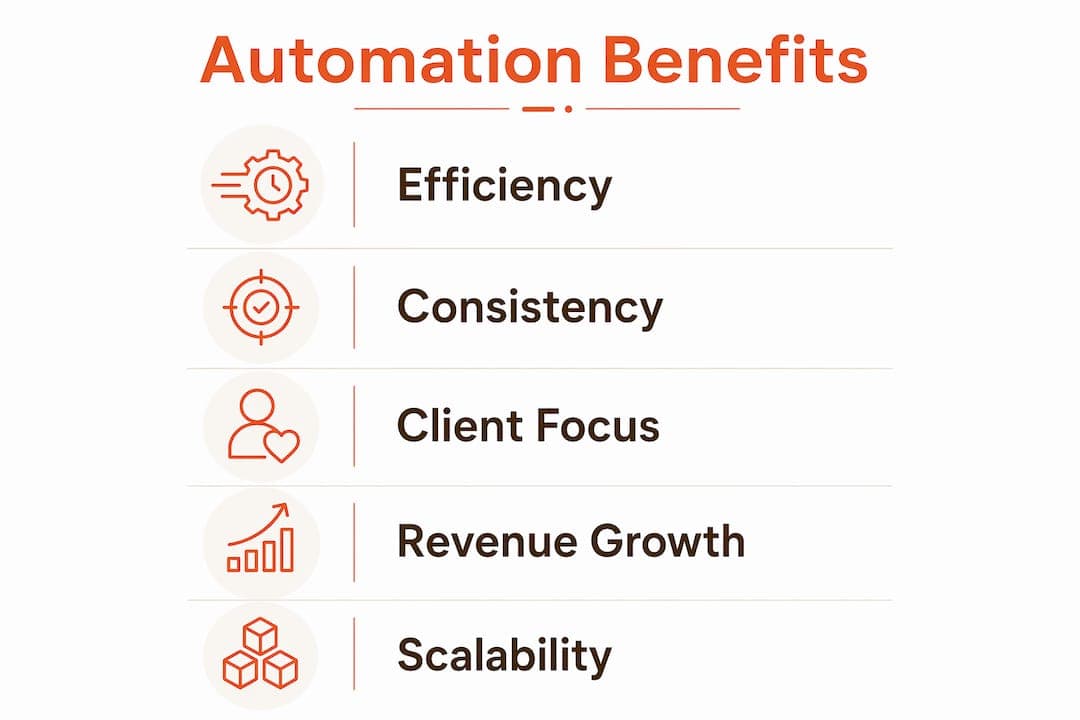
Automation delivers measurable advantages across three areas: operational efficiency, communication consistency, and client satisfaction. Each one compounds the others.
On the efficiency side, AI customer engagement solutions reduce manual tasks, speed up follow-ups, and schedule appointments automatically. That means fewer dropped leads and faster response times without adding headcount.
The benefits of client engagement automation extend well beyond time savings:
- Personalization at scale. AI-powered CRM platforms use machine learning to build dynamic client profiles and deliver next-best-action recommendations based on individual behavior. Every client gets communication that feels tailored, even when you are managing hundreds of contacts.
- Error reduction. Manual data entry and copy-paste follow-ups introduce mistakes. Automation removes those failure points entirely.
- Consistency. Every client receives the same quality of outreach, regardless of which agent handles the account or what time of day it is.
- Faster response. Automated triggers send property updates, appointment confirmations, and status alerts within seconds of a qualifying event.
- Retention. Clients who feel informed and attended to are far less likely to disengage. Firms that stay reactive and manual risk long-term churn as client expectations for always-on communication continue to rise.
The revenue impact is real. Agencies that integrate AI into their CRM workflows see gains within the first year, not after a multi-year transformation project.
How does automation enhance client interactions without losing the human touch?

The most common objection to automating customer communication is that it makes interactions feel cold. That concern is valid when automation is implemented poorly. When done well, the opposite is true.
Automation frees agents from repetitive tasks so they can be fully present during the moments that actually require human judgment: the discovery meeting, the negotiation, the difficult conversation after an offer falls through. Those are the interactions that build trust. No algorithm replaces them.
The practical model works like this. AI handles the routine layer, including status updates, listing alerts, appointment reminders, and post-showing follow-ups. Agents handle the relationship layer, including needs discovery, strategic advice, and emotional support during high-stakes decisions. The two layers reinforce each other rather than compete.
Pro Tip: Customize your automated messages with the client’s first name, the specific property address, and a reference to their stated preferences. Generic automation reads as generic. Personalized automation reads as attentive.
The initial client meeting deserves special attention. Automation does not replace the human connection in that first conversation. It creates the conditions for a better one by ensuring the agent arrives prepared, with full context on the client’s history and preferences already loaded in the CRM.
Which client engagement tasks in real estate are best suited for automation?
Not every task belongs in an automated workflow. The best candidates share two traits: they are repetitive, and they follow a predictable pattern. Here are the tasks that deliver the highest return when automated:
- Follow-up sequences. Post-showing emails, open house thank-you messages, and check-in nudges for leads who have gone quiet. These require consistency, not creativity.
- Appointment scheduling. Automated booking links eliminate the back-and-forth of finding a mutual time. Confirmation and reminder messages reduce no-shows.
- Property match alerts. When a new listing matches a client’s saved criteria, the system sends a notification immediately. Speed matters here. The first agent to surface a relevant listing earns attention.
- Transaction status updates. Clients want to know where their deal stands. Automated milestone notifications, such as offer accepted, inspection scheduled, and closing date confirmed, reduce inbound calls and anxiety.
- Internal team coordination. High-performing agencies automate internal workflows so client status and history are instantly accessible to every team member. Without this, visible inconsistencies frustrate clients when they speak to different agents.
Effective real estate communication also requires managing urgency, not just volume. Urgency matrices and communication logs help teams prioritize outreach and avoid duplicate contact during complex transactions. A client who receives three messages from three different agents asking the same question loses confidence fast.
The distinction between internal and external automation matters. External automation shapes the client experience directly. Internal automation shapes the team’s ability to deliver a consistent experience. Both are necessary. Agencies that automate only client-facing messages while leaving internal coordination manual will still produce inconsistent results.
Arosplatforms builds real estate AI operating systems that handle both layers, connecting CRM data, agent workflows, and client communication into a single coordinated system.
What are practical steps to implement client engagement automation?
Implementation fails most often for one of two reasons: agencies try to automate everything at once, or they automate without first mapping their existing workflows. Both mistakes produce the same result: a system that creates more confusion than it solves.
A reliable approach follows this sequence:
- Audit your current communication workflows. Document every touchpoint from first contact to closing. Identify which steps are repetitive, which are time-sensitive, and which require human judgment. This audit becomes your automation roadmap.
- Start with email personalization. Quick ROI from email personalization is often visible within 90 days. It is the lowest-risk entry point and builds confidence in the broader system.
- Choose a CRM with native AI features. The platform should consolidate data from every touchpoint into a single client profile. Agents should be able to see the full history of every interaction before picking up the phone.
- Automate internal coordination next. Once client-facing messages are running reliably, extend automation to team status updates, task assignments, and handoff notifications.
- Monitor and adjust over 6–12 months. Full-scale omnichannel automation matures over 6–12 months. Set realistic milestones and track response rates, lead conversion, and client satisfaction scores at each stage.
The most common pitfall is generic messaging. Automated messages that read like mass broadcasts damage the relationship they are meant to support. Every automated touchpoint should reference something specific to that client: their search criteria, their timeline, or a property they viewed. Specificity is what separates effective client engagement strategies from spam.
Arosplatforms clients report an average of 82% faster turnaround for key tasks after implementing a customized AI workflow automation system. That speed comes from eliminating the manual coordination steps that slow most agencies down.
What do industry experts foresee for client engagement automation in real estate?
The next phase of automation in real estate moves from reactive to proactive. The real value of AI in client engagement is anticipating client needs based on behavioral data before the client asks. That means a system that notices a client has viewed the same listing type six times in two weeks and surfaces a relevant option before they reach out.
Omnichannel orchestration is becoming the standard expectation. Clients move between email, SMS, phone, and social media without thinking about it. Agencies that can track and respond across all those channels from a single system will hold a significant advantage over those managing each channel separately.
Ethical considerations are also entering the conversation. Clients are increasingly aware that their data drives personalized outreach. Agencies that are transparent about how they use client data, and that give clients control over their communication preferences, will build stronger long-term trust than those that treat personalization as a black box.
The agencies that invest in automation now are building a compounding advantage. Each month of data makes the system smarter, the recommendations more accurate, and the client experience more consistent. Waiting is not a neutral choice.
Key takeaways
Automating client engagement in real estate produces measurable gains in revenue, satisfaction, and efficiency when implemented with clear workflow mapping and a balance between AI-driven communication and human relationship-building.
| Point | Details |
|---|---|
| Revenue and satisfaction gains | AI and CRM integration produces 20–30% revenue growth and up to 28% higher client satisfaction in year one. |
| Start with email personalization | Email automation delivers visible ROI within 90 days and is the lowest-risk entry point for most agencies. |
| Automate routine, not relationships | Let AI handle follow-ups, scheduling, and alerts so agents focus on discovery meetings and negotiations. |
| Internal automation matters | Automating team coordination prevents inconsistent client experiences when multiple agents share an account. |
| Plan for a 6–12 month timeline | Full omnichannel automation matures over 6–12 months. Set milestones and track conversion rates at each stage. |
The mistake most agencies make with automation
The Arosplatforms team has worked with real estate agencies across multiple markets, and the pattern is consistent. Agencies that struggle with automation are not struggling because the technology failed. They are struggling because they automated before they understood their own workflows.
The most common mistake is deploying automated messaging without first defining what a good client interaction actually looks like at each stage of the transaction. The result is a system that sends messages on schedule but says nothing useful. Clients notice. Response rates drop. Agents blame the tool.
The second mistake is over-automating the early relationship. The first client meeting is the single most important touchpoint in a real estate transaction. No automated sequence replaces the trust built in that conversation. Agencies that try to automate their way through the discovery phase consistently underperform on referrals and repeat business.
What actually works is a clear division of labor. Automate the logistics. Protect the relationship moments. Use AI to arrive at every human interaction better prepared, with full context and a clear agenda. That is not a compromise between technology and connection. It is how the two make each other more effective.
— Arosplatforms team
How Arosplatforms helps real estate professionals automate client engagement
Real estate agencies that want to move beyond generic CRM templates need a system built around their specific workflows, client types, and transaction stages.

Arosplatforms builds customized AI operating systems for real estate professionals that connect CRM data, agent workflows, and omnichannel client communication into one coordinated system. The approach embeds directly into your operations, so the automation reflects how your team actually works rather than a generic template. Clients typically see returns within twelve months. Explore AI consulting for real estate markets to see how a tailored system applies to your agency’s specific needs, or review the full range of real estate AI applications available for agencies at different stages of automation maturity.
FAQ
What is client engagement automation in real estate?
Client engagement automation in real estate is the use of AI and CRM tools to handle routine communication tasks, including follow-ups, appointment scheduling, and property alerts, automatically. It frees agents to focus on high-value interactions like negotiations and discovery meetings.
How quickly can real estate agencies see ROI from automation?
Email personalization typically delivers visible ROI within 90 days. Full omnichannel automation matures over 6–12 months, with gains in lead conversion and client satisfaction measurable at each stage.
Does automation make client communication feel impersonal?
Not when it is configured correctly. Automated messages that reference a client’s specific preferences, timeline, and viewed properties read as attentive rather than generic. The key is specificity, not volume.
Which tasks should real estate agents automate first?
Follow-up sequences and appointment scheduling deliver the fastest results with the lowest implementation risk. Both are repetitive, pattern-based, and time-sensitive, making them ideal starting points for automating customer communication.
Why is internal communication automation important in real estate?
When team members lack synchronized client status, clients receive inconsistent or duplicate outreach. Automating internal coordination ensures every agent has full context before contacting a client, which directly improves the client experience.