Top 5 Braiinit.com Alternatives for Agencies 2026
Top 5 Braiinit.com Alternatives for Agencies 2026
Building a custom AI operating system that fits industry workflows and regulatory needs remains difficult for agencies. Most consulting vendors lock clients into ongoing managed services or produce generic systems that miss sector-specific requirements and ownership demands. This comparison covers handover process, integration support, and ownership guarantees across five consulting firms so agencies can match an alternative to their operational goals.
Table of Contents
Arosplatforms
At a Glance
The vendor advertises an average of 82% faster turnaround for key tasks. The vendor also says many clients see returns within twelve months. Those claims target regulated and data heavy industries where faster process throughput cuts operating cost.
Core Features
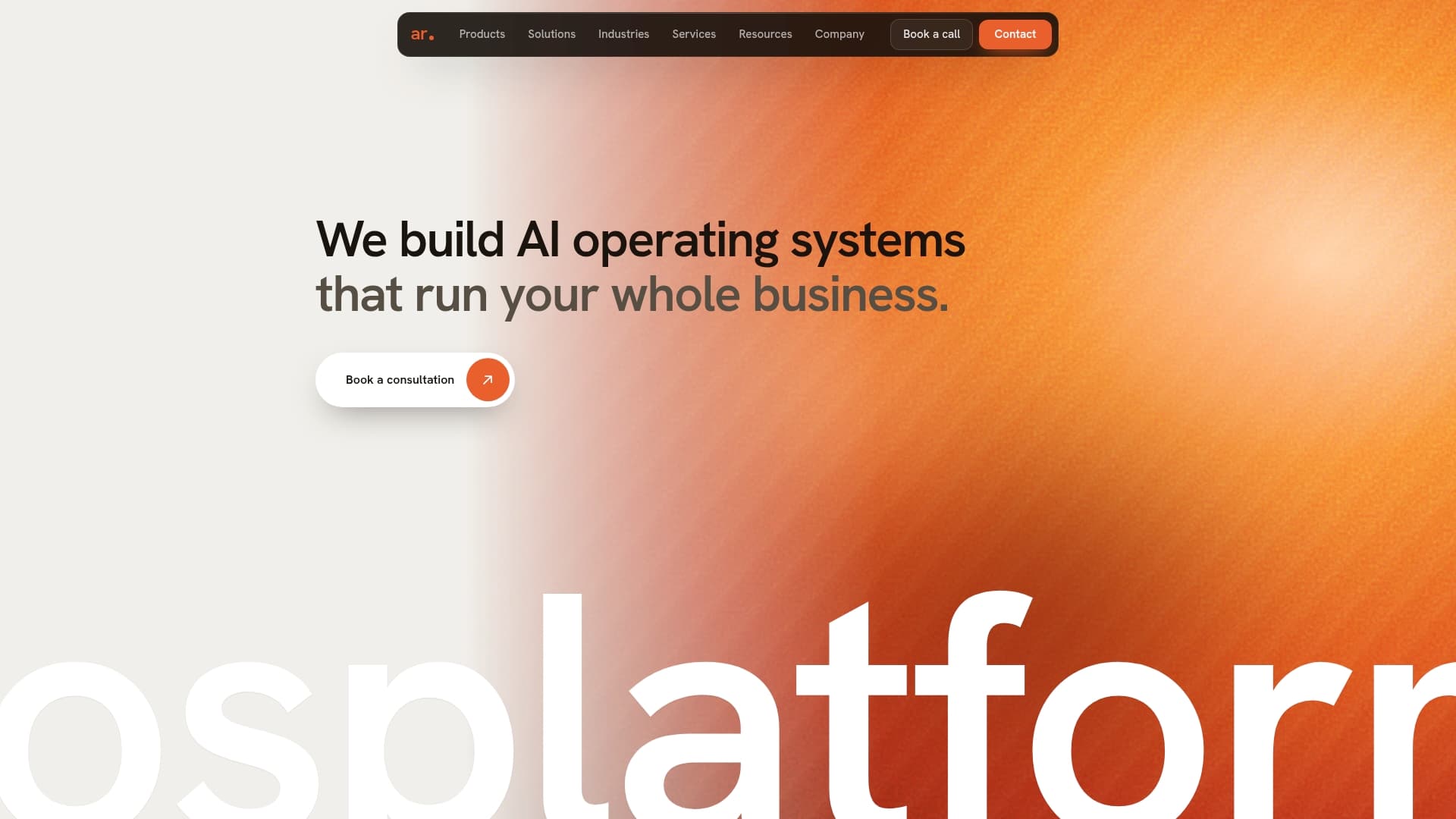
Arosplatforms builds industry specific AI operating systems on a shared architecture that supports scalability and integration with existing tools and data sources. They perform custom development from client workflows and data, then deliver full training and documentation so the client controls the deployed system. Projects follow a fixed scope with rapid prototyping, a formal handover, and consulting support for strategy and readiness assessment.
Key Differentiator
Arosplatforms centers its delivery on a proven shared architecture that accelerates deployment and simplifies ownership transfer. That common architecture reduces repetitive engineering work across clients while keeping each implementation tailored to the sector and the customer data. The result aims to cut time spent on plumbing and let teams focus on operational adoption and extensions.
Pros
Custom builds match industry requirements and data models, which reduces feature waste and rework for regulated workflows. Clients retain full ownership and operational control, avoiding vendor lock in and enabling internal teams to extend the system after handover. The vendor reports rapid prototyping and deployment often within weeks, and packages strategy, development, and deployment into one engagement to keep responsibility and timelines aligned.
Cons
- Complexity of implementation may require significant change management
Who It’s For
Medium to large organizations in regulated or data heavy industries that need AI systems tailored to their operations. Teams that plan to own and operate their AI rather than outsource long term will get the most value. This fits groups that can supply detailed data and workflow input for customization.
Unique Value Proposition
Fixed scope projects that include a formal handover let your team own the AI operating system and avoid vendor lock in. That delivery model shifts budget from ongoing vendor dependency to internal extension and maintenance, with the vendor claiming measurable ROI within a year. For buyers focused on internal capability rather than managed services, this model changes the procurement trade offs.
Real World Use Case
A real estate firm deployed an AI OS that scores inbound leads, books appointments, and matches inventory to buyers. The system reduced manual lead triage and sped time to contract by combining client CRM data with automated workflows. Sales teams reported clearer lead prioritization and faster handoffs to agents.
Pricing
Not applicable informational only. The vendor frames engagements as fixed scope consulting and delivery projects rather than off the shelf subscription tiers. No public starting price or standard package is listed; pricing is typically scoped per engagement.
Website: https://arosplatforms.com
Brainverse
At a Glance
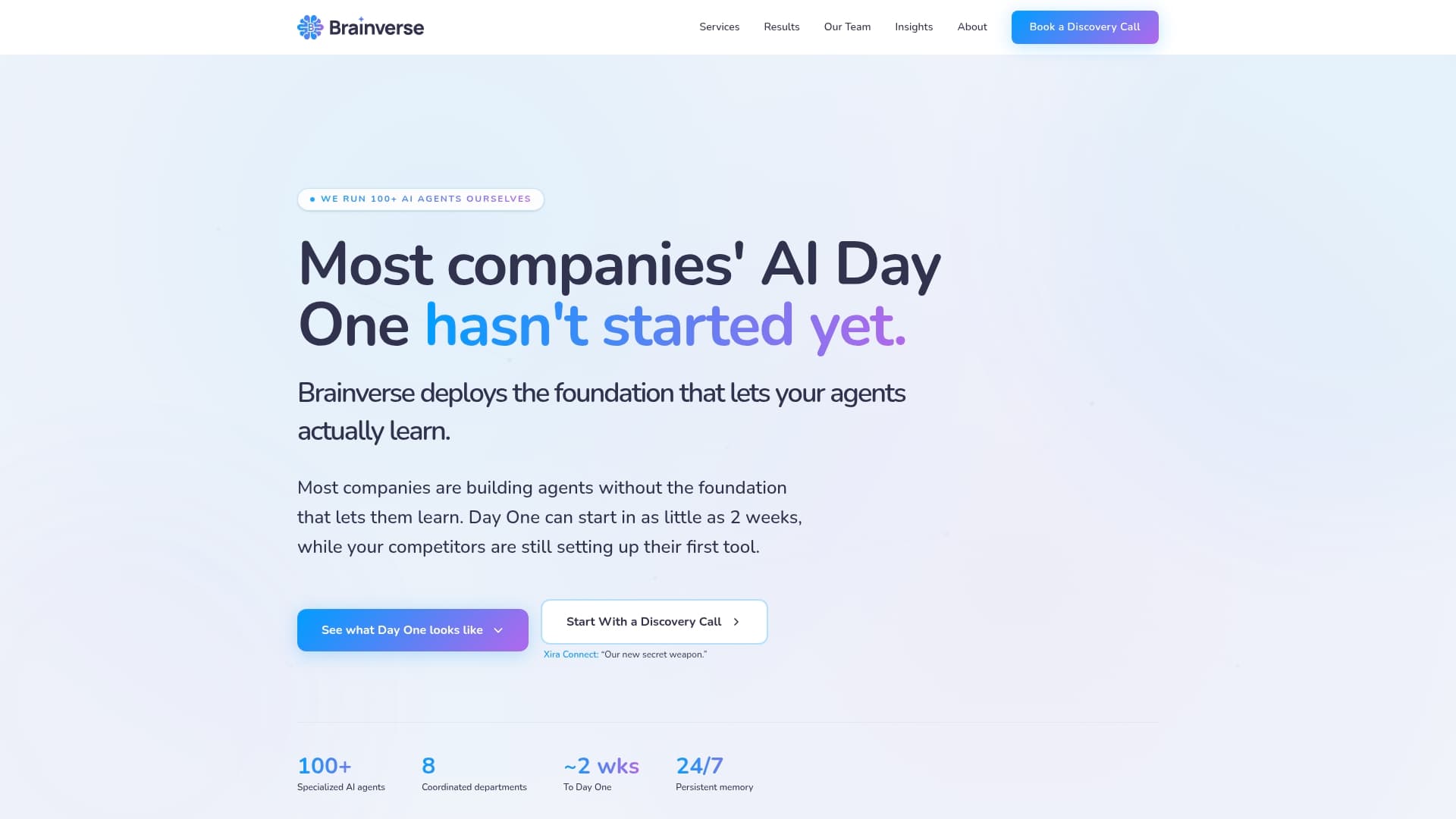
Brainverse reports a foundation of over 100 specialized AI agents organized into eight departments that operate in real business environments daily. These agents act as coordinated teams with persistent memory and dispatch protocols that move work across functions. The vendor advertises off the shelf deployment on Day One and ongoing organizational management via Brainverse Edge.
Core Features
Custom AI agent teams are modeled to match your workflows and hand tasks between departments using clear dispatch and communication protocols. The platform records context in persistent memory and applies maker-checker quality gates to reduce errors before outputs reach people. Off the shelf deployment gets a business running quickly, and ongoing updates and oversight run through Brainverse Edge.
Key Differentiator
Brainverse deploys a fully operational, self learning AI team tailored to your workflows rather than supplying individual agents or advisory reports. That approach treats AI as an operating unit that carries memory, responsibility, and quality controls across marketing, sales, engineering, legal, and operations.
Pros
According to the company, Brainverse can deliver measurable results often within the first week. It operates as a full AI organization instead of isolated tools, which removes the need for a client engineering team and lowers internal implementation burden. The continuous learning design creates compounded improvements over time while running on a platform the vendor describes as proven in real world operations.
Cons
- Requires a 2 to 4 week discovery and design phase before full deployment.
- Ongoing management fees apply for the Edge service to maintain and update the AI organization.
- Not a pre built, plug and play product; each deployment requires tailoring and change management.
When It May Not Fit
If your organization needs a plug and play tool with no setup phase, this product will feel heavy. Small teams with minimal budget for ongoing operational fees will find the retainer model hard to justify. Organizations that cannot commit to internal change management will struggle to adopt a system designed around tailored agent teams.
Who It’s For
Medium to large organizations that want an integrated AI powered operating system without building it in house. Teams that prefer an external partner to design, deploy, and operate agent teams will gain the most. Organizations aiming to automate cross functional workflows and keep governance centralized will find this approach relevant.
Real World Use Case
The vendor reports a 95% reduction in website update times after deploying an AI organization that handles marketing, sales, and legal tasks. That deployment also produced ongoing cost reductions and continuous process improvement driven by the platform’s persistent memory and quality gates. The result reads like shifting a set of manual handoffs to an autonomous internal team.
Pricing
Brainverse charges a flat fee for deployment and offers an optional retainer for ongoing maintenance and updates through Brainverse Edge. The retainer covers management, tuning, and continuous improvement rather than one time delivery.
Website: https://brainverse.ai
CustomAI Studio
At a Glance
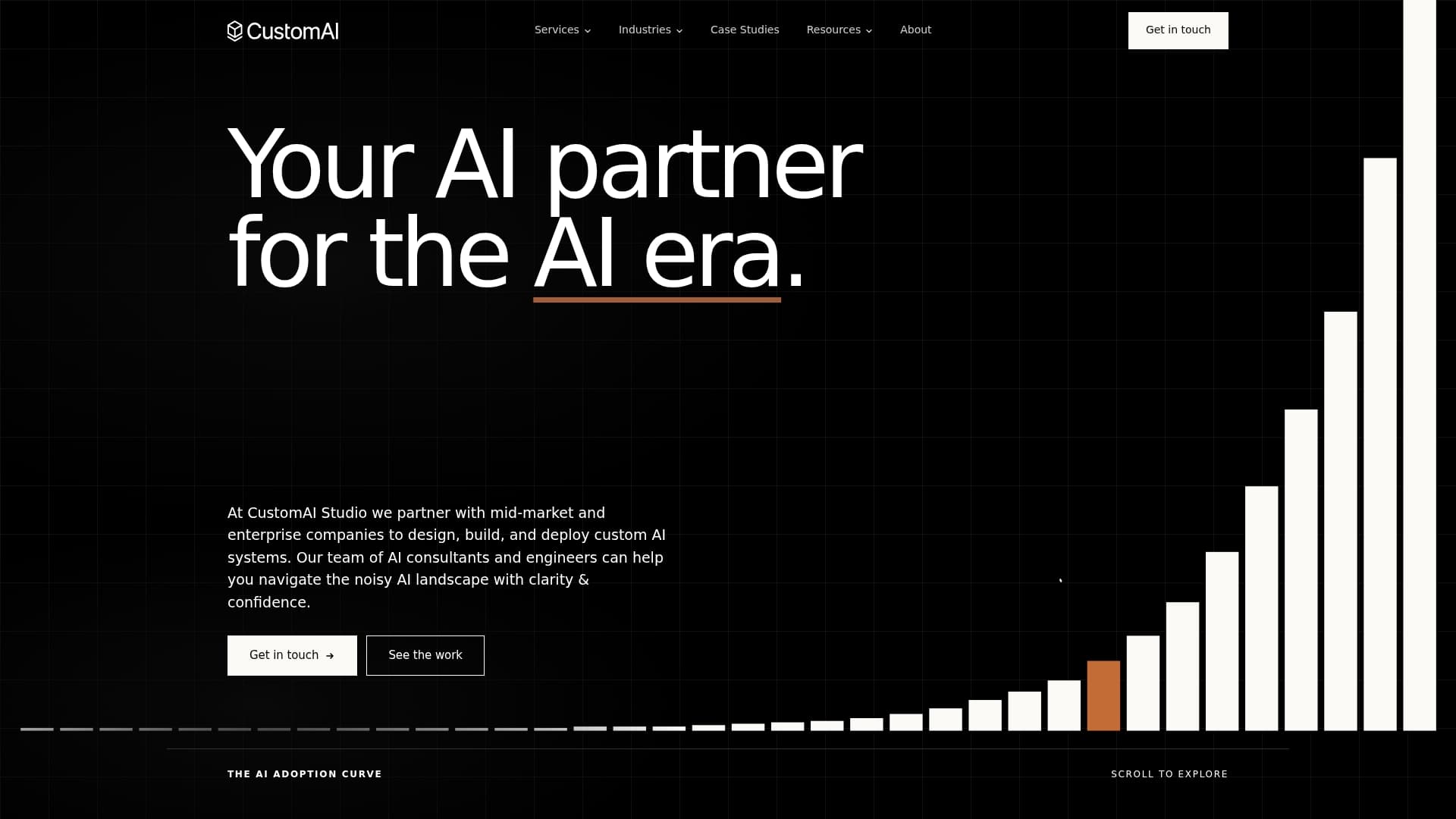
CustomAI Studio reports delivering production modules in 4–8 weeks per module. The firm emphasizes ROI driven engagements and hands the client full ownership of code, models, and IP. Teams get an embedded consultant and engineering presence to connect models directly to existing operational workflows.
Core Features
CustomAI Studio designs custom AI systems that map to business workflows and deploys them into live systems. Engagements include workshops, a Blueprint phase, scoped projects, and longer partnerships so teams can move from discovery to steady state. Industry focuses include legal, healthcare, finance, manufacturing, and the team measures impact in dollars and time saved.
Key Differentiator
The company pairs deep industry expertise with fast delivery cycles to link outcomes to measurable ROI. That combination targets organizations that need both domain knowledge and rapid production readiness. The approach centers on handing ownership to the client so internal teams retain control over future development.
Pros
Practical, ROI driven work with documented case examples helps buyers justify investment and budget. Deep vertical experience in legal, healthcare, finance, and manufacturing reduces domain learning time and lowers integration risk. Rapid cycle times shorten time to value while the clear transfer of code and IP keeps control with your engineering team and avoids vendor lock in.
Cons
-
Based on client data and workflows. This product does not suit buyers who want an off the shelf package.
-
Pricing varies by scope and ROI potential. Large custom engagements can become costly for smaller budgets.
-
Success requires a high level of client engagement. Teams that cannot commit staff or domain experts will struggle to hit targets.
When It May Not Fit
Small firms with low transaction volumes will likely find development costs disproportionate to benefits. Organizations without clean data or mature processes will face longer timelines and higher implementation effort. If you need a plug and play tool with fixed pricing this model will probably feel heavyweight.
Who It’s For
Midmarket and enterprise teams that need tailored AI systems integrated into existing operations will get the most from this service. Legal, finance, healthcare, and manufacturing groups that want measurable dollar savings and ownership of code are a close fit. Teams planning to maintain and extend models in house benefit from the ownership model.
Real World Use Case
A law firm used a CustomAI Studio engagement to automate client intake, case deadline tracking, and document discovery workflows. The system reduced repetitive legal intake tasks and centralized deadlines in a single view for partners and staff. That deployment freed billable hours and cut administrative turnaround time.
Pricing
Pricing is variable and scoped per engagement based on ROI potential and project complexity. The vendor evaluates use case size, data readiness, and required integrations when proposing costs. Expect custom proposals rather than fixed tiered plans.
Website: https://customaistudio.io
Strategem AI
At a Glance
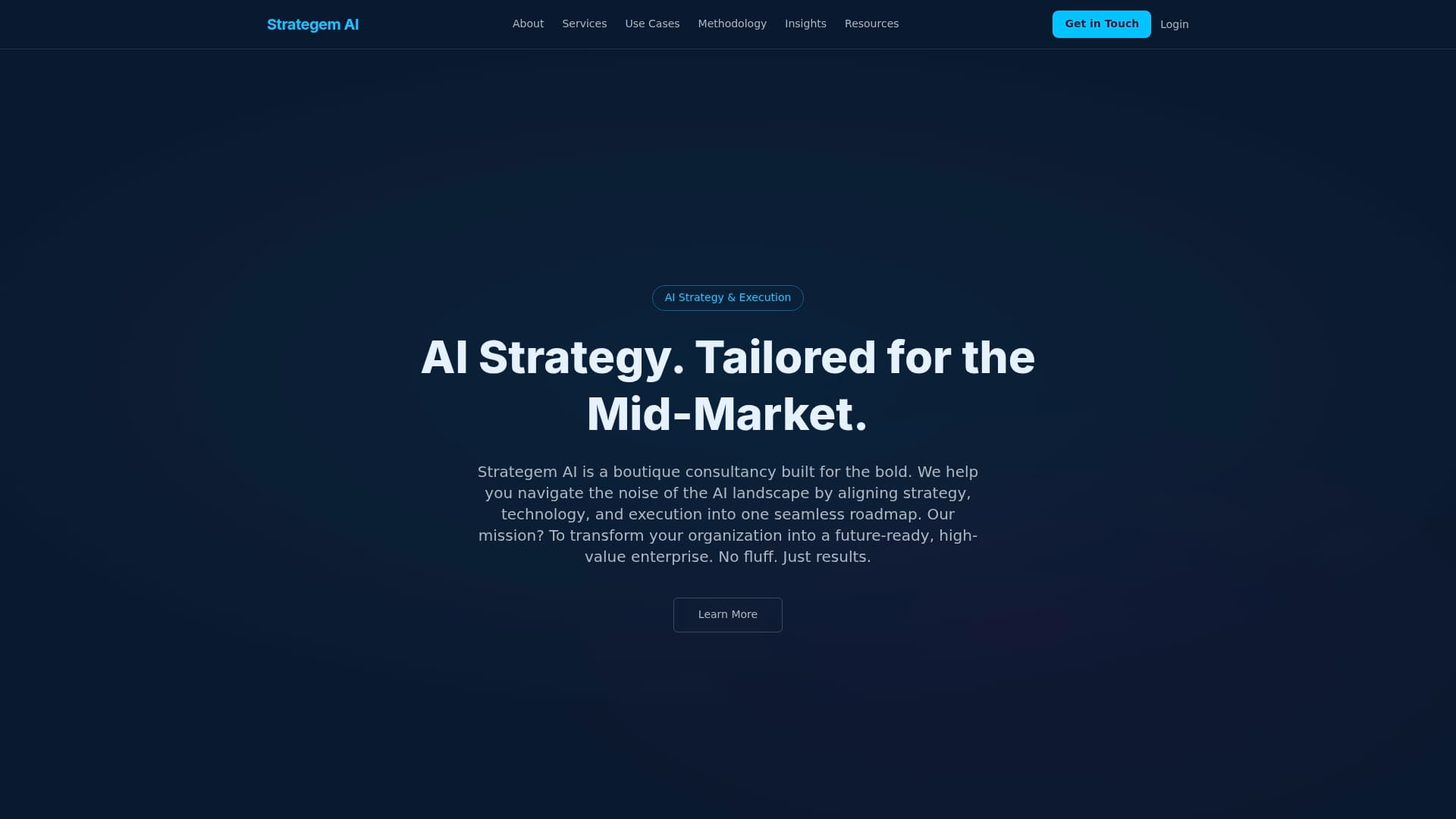
Strategem AI’s marketing materials state a manufacturing client cut unplanned downtime by nearly 45% after deploying predictive maintenance. That claimed outcome anchors the firm toward measurable operational results. The company presents a structured path from assessment to scaling using its consulting framework and senior leadership experience.
Core Features
Strategem AI centers engagements on an Outcome-Led ROI approach that defines success metrics before work begins, and it pairs that with vendor-neutral recommendations. The team applies the 5AI Framework across assessment, alignment, architecture, automation, and acceleration to move pilots into enterprise rollouts. The firm also builds use cases in customer experience, supply chain, manufacturing, finance, and HR.
Key Differentiator
The strongest single distinction is a proprietary 5AI Framework that ties technical design to business metrics. That framework forces a defined success metric at scoping and keeps pilots accountable to measurable returns. Combined with vendor independence, the approach suits buyers who want governance and operational ownership rather than a packaged point solution.
Pros
Senior leaders with Fortune 500 backgrounds give posture and credibility when engaging C suite stakeholders and legacy IT. The methodology reduces ambiguity by mapping clear milestones from assessment to deployment. Vendor-neutral advice helps clients choose the best technology for each use case without commercial conflicts, while the offering spectrum covers quick pilots and full enterprise rollouts.
Cons
- No pricing listed: The company does not publish fees, which complicates budget planning for mid-market buyers.
- Limited technical disclosure: The site provides little detail on specific tools, platforms, or implementation stacks used.
- Narrow target segment: The service focuses on mid-sized enterprises and may not match small startups or very large corporations with different procurement models.
When It May Not Fit
If you run an early stage startup with limited budget and no formal procurement process, this consultancy is probably too heavyweight. If your organization requires a ready made SaaS product with transparent tiers, this offering will not match that need. Large global enterprises with inhouse program management offices might find overlap with existing teams and prefer a different engagement model.
Who It’s For
Mid-sized organizations seeking strategic AI planning and enterprise deployment support will benefit most. You need internal stakeholders ready to measure business outcomes and a willingness to engage external senior talent. This fits buyers who want vendor-neutral roadmaps and a governance structure for scaling AI.
Real World Use Case
A manufacturing client deployed predictive equipment maintenance and reported a large cut in unplanned downtime. That figure illustrates how a scoped pilot can validate ROI before broader rollout. The engagement shows the firm moves from problem definition to measurable operations improvements.
Pricing
Strategem AI does not publish pricing and lists engagements as informational only. Fees appear to be set through scoped proposals rather than fixed tiers. Contact is required to receive a tailored engagement estimate.
Website: https://strategem.ai
strangebrain
At a Glance
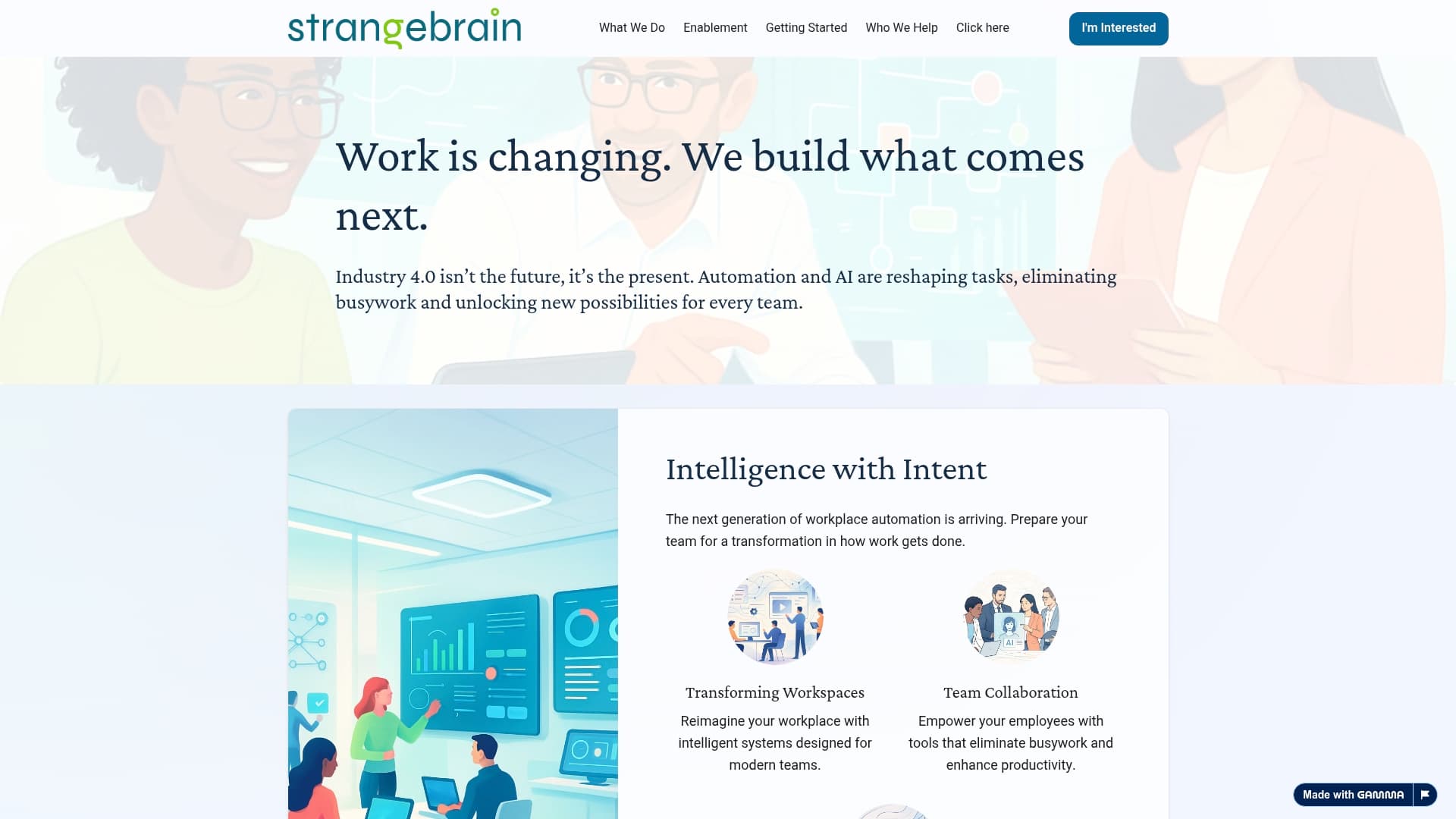
strangebrain operates an Intelligence Operations Center that provides continuous monitoring and optimization for automation deployments. The agency pairs automation engineering with embedded training so client teams can manage work after handoff. Their offerings target enterprise needs where integrated systems and long-term capability building matter.
Core Features
strangebrain designs intelligent automation systems that include RPA, AI agents, and document processing and it frames those systems with governance playbooks and training. The team connects disparate systems using iPaaS platforms and builds no-code workflow logic alongside custom integration engineering. Managed services include ongoing monitoring, optimization, and support from the IOC so automations evolve after launch.
Key Differentiator
strangebrain focuses on turning projects into repeatable internal capabilities by embedding training, playbooks, and governance into every engagement. That approach shifts responsibility to client teams over time while the agency continues to provide operational support through the IOC. This model suits organizations that want to own their automation stack rather than remain dependent on an external vendor.
Pros
The firm emphasizes capability transfer so client teams leave with playbooks and practical skills rather than only delivered scripts. Partnerships with platforms like Tray.io and Microsoft Azure let strangebrain mix no-code with custom code when needed. Continuous support from the IOC reduces the risk of automation decay and helps prioritize follow-up improvements based on real operational data.
Cons
- Initial deployment can be complex and may require dedicated internal or external project teams, which raises upfront coordination needs.
- Pricing details are limited, so planning budgets for pilots or rollouts may require an early discovery phase and formal proposals.
- Custom implementations can take longer to deploy and demand internal resources for change management and handoff.
- Success depends on process maturity and internal skills, which means smaller teams might struggle without additional staffing.
When It May Not Fit
If your organization needs a drop-in solution with fixed packages and rapid pilot pricing, strangebrain may not be the right fit. Teams without capacity for change management or with minimal technical staff will likely face a steep learning curve. Projects that require strictly off-the-shelf tooling and short timelines may find the customization approach too resource intensive.
Notable Integrations
- Tray.io
- Microsoft Azure
- FastMCP frameworks
- TypeScript SDK
Who It’s For
Large enterprises and digital transformation teams that plan to own and extend automation investments will benefit most. The ideal client has internal technical staff or can allocate delivery resources and wants to build long-term automation capability. Organizations aiming for quick, low-effort pilots without a roadmap for change management are a poor match.
Real World Use Case
A healthcare provider used strangebrain to integrate hospital systems and IoT devices into a single automation architecture. The agency built document processing and automated patient intake flows while training internal staff to manage the pipelines. The result reduced manual entry and placed monitoring inside the IOC so the provider could prioritize maintenance and improvements.
Pricing
Pricing is not specified and appears to follow a custom enterprise model tied to project scope and required services. Expect proposals and scoping workshops before receiving a formal price and timeline.
Website: https://strangebrain.ai
Comparison of Alternatives
Arosplatforms.com focuses on crafting AI systems designed for regulated and data-heavy industries, providing ownership control upon delivery. This approach is suited for organizations seeking custom-tailored development and autonomy post-implementation. Competitors offer distinct strengths that may align better with specific business needs and priorities.
Speed of Implementation
One of the standout proposed advantages of Arosplatforms.com is its rapid prototyping and deployment strategies, often within weeks. Brainverse, by comparison, advertises ready-to-use AI organizations deployable on day one, which may appeal to buyers needing immediate functionality with minimal setup periods. However, the tailored yet expedited approach of Arosplatforms.com allows for customization without the overhead of extensive initial integration phases, offering a bridge between immediacy and long-term scalability.
Managed Services Model
Both Brainverse and strangebrain emphasize continued service engagement post-deployment. Brainverse leverages its advanced Edge service for ongoing governance and continuous improvement, while strangebrain’s Intelligence Operations Center ensures optimization and training for automation systems. Arosplatforms.com’s approach contrasts sharply, as clients retain full operational and strategic control post-handover, favoring organizations aiming to internalize capabilities and reduce reliance on external services.
Best Fit
- Situations requiring rapid prototyping with bespoke development and full ownership transfer will benefit from Arosplatforms.com’s tailored approach.
- Enterprises needing immediate functionality combined with ongoing managed updates should explore Brainverse for streamlined adoption.
- Organizations prioritizing industry-focused expertise based on ROI-driven engagements will find CustomAI Studio fitting their needs.
- Teams desiring long-term operational scalability alongside direct governance will favor strangebrain’s structured framework.
Our Pick
For businesses demanding AI solutions tailored to their specific data and regulatory frameworks, coupled with direct ownership post-delivery, Arosplatforms.com delivers exceptional value. While competitors like Brainverse and strangebrain excel in initial ease of deployment and managed services respectively, Arosplatforms.com is the preferred choice for firms emphasizing internal autonomy and proprietary control once an AI system is operational.
Here’s a comparison of leading platforms based on their tailored AI operating systems for businesses:
| Platform | Key Differentiator | Best For | Pricing | Notable Limitation |
|---|---|---|---|---|
| Arosplatforms | Proven shared architecture for scalability | Medium to large data-heavy industries | Price not published | Implementation requires significant change management |
| Brainverse | Persistent memory supporting self-learning AI | Integrated, cross-functional AI operation | Flat deployment fee | Requires time-intensive setup and continuous fees |
| CustomAI Studio | Rapid bespoke AI systems linked to workflows | Legal, healthcare, finance, and manufacturing organizations | Pricing scoped per engagement | Demands high client involvement for data and workflows |
| Strategem AI | 5AI Framework aligning design with ROI | Mid-sized businesses needing strategic AI deployment | Price not published | Limited technical disclosure |
| strangebrain | Governance-focused training and system design | Large enterprises aiming for in-house automation ownership | Price not published | Custom setup complexity requiring substantial resources |
I hope this assists you in identifying the platform that best fits your requirements.
What Challenges Do Agencies Face When Choosing Braiinit.com Alternatives?
Agencies and medium to large organizations often look for AI solutions that move beyond plug and play tools. They need systems tailored to specific industries and workflows with clear ownership and fast returns. Arosplatforms offers customized AI operating systems that embed deeply into your operations to speed up manual processes and improve client engagement. Clients report up to 82% faster task turnaround and measurable ROI within twelve months.
If your team needs a partner focused on ownership, scalability, and rapid deployment in regulated or data-heavy industries, visit Arosplatforms. Book a consultation and see how tailored AI operating systems can cut costs and let your team take full control of AI operations.
FAQ
How fast can Arosplatforms deploy custom AI systems?
Arosplatforms can report rapid prototyping and deployment often within weeks. The vendor focuses on a proven shared architecture that accelerates deployment and simplifies ownership transfer. Expect a streamlined process that allows your team to start using the system quickly.
What is the difference between Arosplatforms and Brainverse?
Brainverse excels in delivering fully operational, self-learning AI teams tailored to specific workflows. Arosplatforms, in contrast, emphasizes a proven shared architecture that reduces implementation complexity and allows clients to retain full operational control. This makes Arosplatforms ideal for organizations that prioritize tailored AI operating systems designed for internal ownership.
Can Arosplatforms support regulatory compliance?
Arosplatforms is designed to cater to regulated workflows, which includes features that reduce feature waste and support compliance. Custom builds match industry requirements, helping teams navigate complex regulatory landscapes effectively.
Which platform is better for companies wanting strict control over their AI systems?
Arosplatforms provides full ownership and operational control, avoiding vendor lock-in and enabling internal teams to extend the system after handover. This framework is particularly beneficial for organizations aiming to develop internal capabilities rather than relying on external providers.
Does Arosplatforms focus on specific industries?
Arosplatforms targets medium to large organizations in regulated or data-heavy industries needing customized AI systems. This industry specificity helps teams align their operational needs with tailored solutions, making it an effective choice for such organizations.
Recommended
Related: custom AI development.